Best Property Management Software for Florida 2026
Top property management software for Florida landlords in 2026. Covers security deposit rules, 3-day notice, tenant screening, and the best tools for FL.
About the author
Amir Sojoudi · Co-founder, Propilot
Amir Sojoudi is the co-founder of Propilot. He builds AI-powered tools for Canadian landlords.
Florida landlords in 2026 operate in a clear landlord-rights framework: no statewide rent control (state law preempts local ordinances after 2023), a 3-Day Notice to Pay or Quit for non-payment under Florida Statutes Section 83.56, and strict security deposit return timelines (15 days with no deductions, 30 days with itemized claim under FS 83.49). The best property management software for Florida handles these operational requirements efficiently — particularly rent collection tracking, security deposit documentation, and maintenance records that support a clean dispute process.
Florida Tenant Law: The Landlord-Friendly Framework
Florida is consistently rated as one of the most landlord-favorable states in the US. The key provisions:
No Rent Control
Florida Statutes preempt local governments from enacting rent control ordinances. Following a 2023 state legislative action, this preemption is clear and comprehensive — no Florida city or county can cap rents. Landlords can charge and adjust market-rate rents freely.
This is similar to Texas and Alberta (Canada): landlords in these jurisdictions focus on operational efficiency rather than compliance calculations for rent caps.
Eviction: The 3-Day Notice Process
Florida’s non-payment eviction process under Florida Statutes Section 83.56:
- 3-Day Notice to Pay Rent or Quit — serve written notice to the tenant (3 business days, excluding weekends and holidays)
- Tenant compliance or non-compliance — tenant pays, vacates, or does neither
- File eviction complaint — county court filing if tenant doesn’t comply
- Court hearing — typically within 5-20 days in Florida
- Default judgment or hearing outcome
- Writ of possession — if landlord prevails
Total uncontested timeline: typically 3-5 weeks. Florida’s process is comparable to Texas in speed.
Security Deposit Rules: Two-Track System
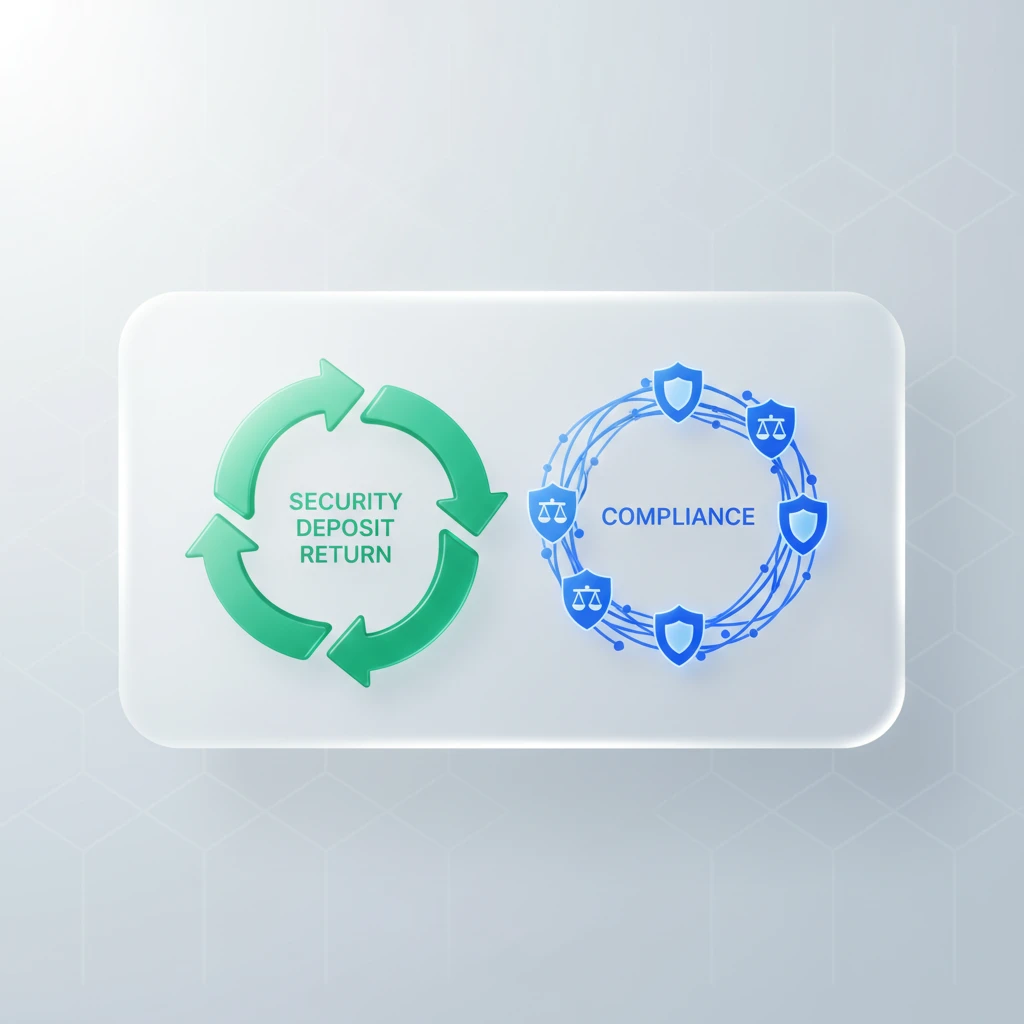
Florida Statutes Section 83.49 creates a two-track timeline:
Track 1: No deductions. Return the full deposit within 15 days of tenancy end.
Track 2: With deductions. Send written notice to the tenant’s last known address within 30 days, itemizing the deductions. If the tenant doesn’t object within 15 days of receiving the notice, the landlord can deduct the claimed amount.
If the landlord misses the 30-day deadline for claiming deductions, they may forfeit the right to make deductions entirely. This is a procedural trap that software can help avoid by tracking deposit return deadlines automatically.
Landlord Disclosure Requirements
Florida requires landlords to disclose:
- Name and address of the landlord or managing agent (for notice purposes)
- How the security deposit is held (bank account or surety bond)
- Tenant’s right to request a move-in walkthrough inspection
These disclosures must typically be included in or accompany the lease agreement.
Features Florida Landlords Need in Property Management Software
| Feature | Why Florida Needs It | Priority |
|---|---|---|
| Online rent collection + payment tracking | Documentation for 3-day notice eligibility | Critical |
| Security deposit tracking with deadline alerts | 15-day / 30-day return deadlines | Critical |
| Move-in/move-out inspection with photos | Security deposit dispute defense | High |
| Eviction notice documentation | 3-day notice service records | High |
| Maintenance request tracking | Habitability requirements under FS 83.51 | High |
| Tenant screening | Federal FHA compliance | High |
| Lease management | Florida-specific lease templates | Medium |
| AI inquiry response | Competitive leasing in FL markets | Medium |
Platform Comparison for Florida Landlords
| Platform | Rent Collection | Security Deposit Tracking | Eviction Docs | Screening | AI Features | Cost |
|---|---|---|---|---|---|---|
| AppFolio | Yes | Yes | Yes | Yes | Moderate | $1.49+/unit/mo |
| Buildium | Yes | Yes | Yes | Yes | Limited | $58-375/mo |
| TurboTenant | Yes | Basic | Basic | Yes | None | Free-$15/mo |
| Innago | Yes | Yes | Basic | Yes | None | Free |
| Avail | Yes | Basic | Basic | Yes | None | Free-$9/unit/mo |
| RentRedi | Yes | Basic | Basic | Yes | None | $19.95-35/mo |
| Propilot | Yes | Yes | Basic | Yes (Canadian focus) | Full AI leasing | $29/mo (US expansion planned) |
Florida Rental Market Context 2026
Florida’s rental markets vary significantly by region:
| Market | Estimated Vacancy Rate | Avg 2-BR Rent | Notes |
|---|---|---|---|
| Miami | 4-6% | $2,400-2,800 | High rents, international demand |
| Orlando | 6-9% | $1,600-1,900 | Major construction surge 2023-2025 |
| Tampa-St. Pete | 6-8% | $1,700-2,000 | Moderated from 2022-2023 peaks |
| Jacksonville | 7-10% | $1,400-1,700 | More affordable, higher vacancy |
| Fort Lauderdale | 4-6% | $2,200-2,600 | High demand, lifestyle market |
Florida experienced a massive influx of domestic migration in 2020-2023 that drove rents sharply higher, followed by a supply wave in 2023-2025 that loosened most markets. 2026 shows a more balanced market, though coastal South Florida remains tight.
The Security Deposit Deadline Is a Real Trap
The 30-day itemized claim deadline in Florida is operationally tricky for self-managing landlords. The timeline:
- Tenant moves out
- Landlord has 15 days to return deposit if no deductions
- If making deductions: 30 days to mail written itemized notice
- If tenant doesn’t respond within 15 days of notice, landlord can deduct
If the landlord misses the 30-day window — common when managing manually — they may lose the right to deduct. Property management software that tracks move-out dates and generates automatic reminders prevents this.
Tenant Screening in Florida: Practical Considerations
Florida has no state-specific tenant screening restrictions beyond federal Fair Housing Act compliance. Florida landlords can conduct standard credit, income, and background checks, provided they apply consistent criteria to all applicants and do not discriminate on protected federal characteristics.
One Florida-specific consideration: the application fee. Florida law does not cap application fees the way California does, but landlords should keep fees reasonable to avoid deterring qualified applicants. In markets like Miami and Fort Lauderdale where qualified tenants have options, excessive application fees can drive good applicants to competing landlords.
For Section 8 voucher holders, Florida has no statewide source-of-income protection (unlike California). However, some Florida municipalities may have local ordinances. Landlords should verify local rules for each market.
Choosing the Right Software Tier for Your Florida Portfolio
1-5 units: Free and low-cost platforms (Innago, TurboTenant free tier) cover the essentials. The security deposit deadline tracking is the most important Florida-specific feature — missing the 30-day window is a real risk at this size where you may be managing manually. For a broader comparison of property management software for small landlords managing 1-10 unit portfolios, that guide covers the top options in detail.
6-25 units: At this scale, the volume of move-outs, deposit returns, and maintenance requests makes manual tracking genuinely risky. A platform with automated deadline alerts and centralized documentation pays for itself in avoided mistakes. AppFolio and Buildium are options, as is RentRedi for mobile-first operators.
25+ units: Professional operators in Florida typically use AppFolio or Yardi. The accounting depth, owner reporting, and maintenance workflow automation at this tier justify the per-unit costs.
Florida’s Insurance and Habitability Context
Florida landlords face unique habitability considerations compared to most US states. High humidity, hurricane exposure, and aging housing stock in many markets create a maintenance and insurance context that affects software needs:
- Hurricane-season maintenance tracking: Roof repairs, window inspections, and storm preparation tasks create seasonal spikes in maintenance requests. Software with good maintenance categorization and priority queuing helps manage these cycles.
- Mold and moisture issues: Florida’s climate makes moisture-related maintenance requests common. Documentation of prompt response to mold complaints — accessible through software records — matters for habitability disputes.
- Insurance documentation: Many Florida landlords maintain detailed records of property condition for insurance purposes. Software that stores dated inspection photos with property records serves double duty.
AI Leasing for Florida Landlords
Florida’s loosening markets in Orlando, Jacksonville, and Tampa mean that leasing speed matters more in 2026 than it did at peak 2022 occupancy rates. AI inquiry response and pre-qualification help Florida landlords close on qualified tenants faster in a market with more options for renters. Use the vacancy cost calculator to see exactly what each additional day of vacancy costs you — in markets like Tampa or Orlando where average rents sit around $1,800, a 10-day leasing delay is real money.
Propilot is Canada-first with US expansion planned. Florida landlords interested in AI-powered leasing can join the early access list. For platform comparison including current US options, see the compare page.
Managing properties in Canada too? Propilot is purpose-built for the Canadian market — see how it works.
Related Reading
- Best AI Property Management Software 2026 — top AI-powered platforms for landlords in 2026
- California Landlord Software 2026 — landlord software for California’s regulated market
- Texas Landlord Software 2026 — landlord software for Texas rental properties
Checklist: What to Look for in Florida Property Management Software
- Automated security deposit deadline tracking (15-day and 30-day alerts)
- Rent payment date tracking (for 3-day notice eligibility)
- Move-in/move-out inspection with photo storage
- Eviction notice template and service documentation
- Online rent collection with ACH support
- Maintenance request tracking with completion records
- Lease storage with e-signature capability
- Tenant screening with federal FHA compliance
These fundamentals cover the vast majority of Florida landlord compliance needs. The leasing funnel — inquiry to screening — is where AI automation adds the most time value on top of these operational basics.
Understanding Florida’s Short-Term Rental Market
Florida’s proximity to vacation destinations and retiree communities creates a significant short-term rental market — Airbnb and VRBO activity in Miami, Fort Lauderdale, Orlando, and the Keys differs substantially from long-term residential management. It is worth noting that most property management software reviewed in this guide is designed for long-term residential tenancies governed by Florida Statutes Chapter 83. Short-term rental management requires different tools optimized for nightly booking, turnover cleaning coordination, and dynamic pricing.
Florida landlords who manage a mix of long-term and short-term rentals typically need separate software stacks for each type, or a unified platform that supports both — a gap in the market that most residential-focused platforms have not yet addressed fully.
For landlords managing only long-term residential tenancies, the software features in this guide cover all the critical compliance and operational requirements.
Related Tools & Resources
Sources and citations
- Florida Statutes Chapter 83 - Landlord and Tenant — Florida Legislature
- Florida Landlord-Tenant Law - FS 83.49 Security Deposits — Florida Legislature